


AI Tools for SEO Optimization: Smarter Content Workflows
AI Tools for SEO Optimization: Where to Start
AI tools for SEO optimization can help you find topic ideas, group keywords by intent, draft structured content, improve titles and meta descriptions, and spot technical issues. Start with one clear workflow: use AI to turn customer questions and data from Google Search Console—Google’s tool for monitoring your website’s performance in Google Search—into a prioritized content brief, then have a knowledgeable person check facts, brand voice, and usefulness before publishing.
These tools do not replace sound SEO. They can make repetitive work faster, so your team can spend more time on original experience, credible sources, helpful video, customer proof, and clear answers. That matters as AI-assisted search and agentic browsers—browsers with AI assistants that can carry out tasks on a user’s behalf—summarize pages, recommend brands, and complete tasks for users.
For small and midsize companies, the goal is not to publish more generic pages. It is to build content that is easy for people, search engines, and AI assistants to understand and trust. Clear headings, direct answers, structured data that labels page information for search systems, accurate titles and descriptions, and evidence of experience, expertise, authoritativeness, and trustworthiness (E-E-A-T) all support that work.
Upskale Marketing’s team brings decades of experience in marketing, branding, strategy, and technology. Our AI-search optimization work helps brands strengthen their visibility across leading AI platforms.
Key Categories of AI Tools for SEO Optimization
Customers now have more ways to search, including AI-generated answers. As AI-assisted search becomes another way customers discover businesses, marketing teams can review how their content serves both traditional search and AI answers. AI tools can support several kinds of work within AI SEO.
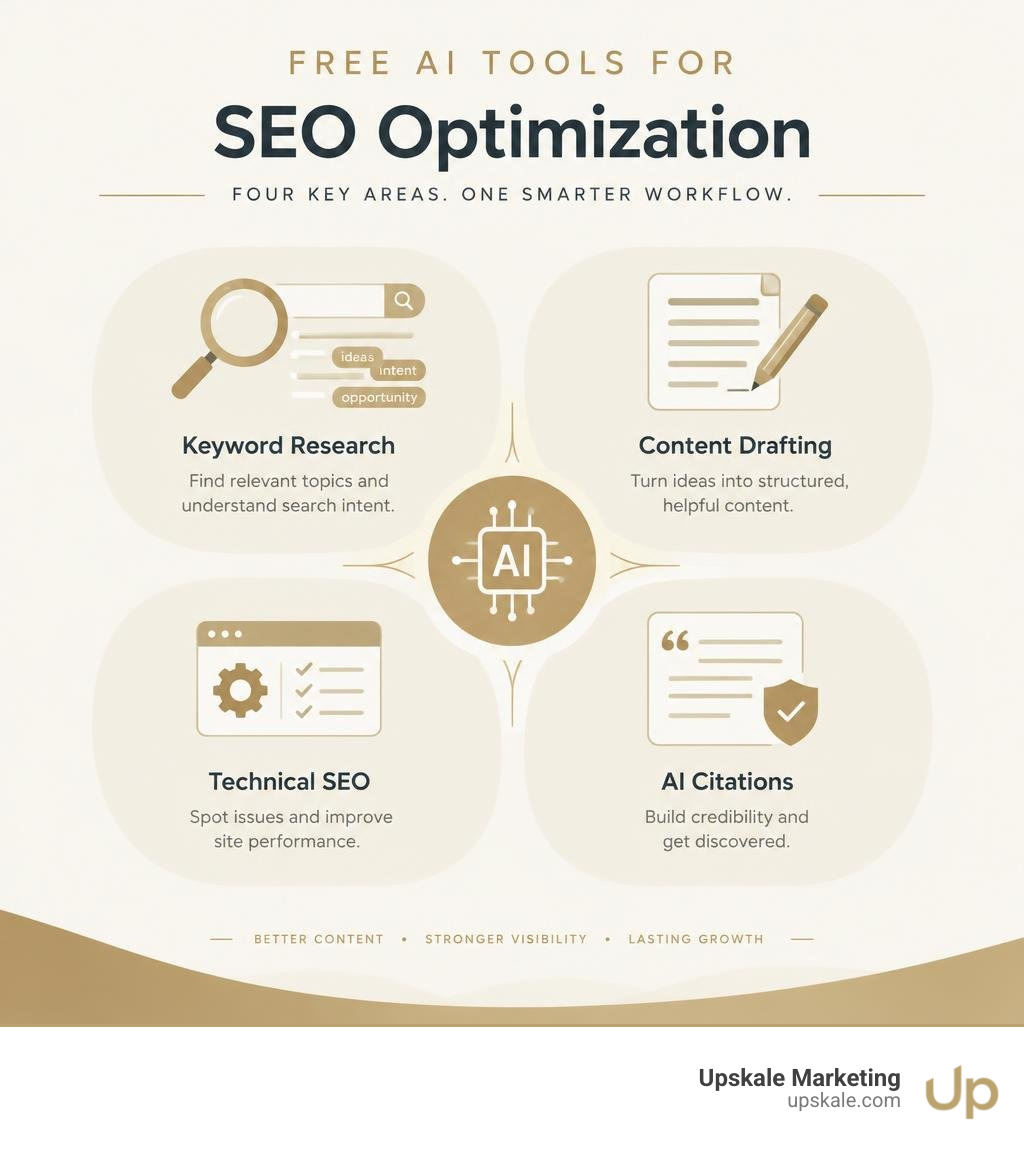
We group AI tools into four main uses:
- Generative Language Models: Chat interfaces and open-source models—models licensed for use, modification, and redistribution—that turn briefs into structured outlines, generate title tags, and summarize complex topics.
- Trend and Intent Analyzers: Tools that analyze customer searches, group specific phrases by what the searcher wants to accomplish, and suggest topics your current content may not address.
- On-Page and Schema Builders: Tools that organize text into HTML, the language used to structure web pages, draft schema markup, standardized labels that describe page information to search systems, and help editors review readability.
- Open-Source Technical Agents: Tools run on infrastructure your team controls that connect to data sources, track search visibility, check site structure, and prepare content for review.
| Tool Category | Core Capabilities | Primary SEO Benefit | Best For |
|---|---|---|---|
| Generative AI language models | Content drafting, meta descriptions, FAQ expansion | Can reduce initial drafting time | Content teams, copywriters |
| Keyword & Intent Engines | Grouping related searches, finding questions, identifying searchers’ goals | Suggests related questions and keyword groups | SEO strategists, founders |
| On-Page & Schema Tools | Drafting structured-data labels, suggesting accessibility labels, formatting | Helps automated systems interpret page information | Webmasters, technical editors |
| Open-Source Agents | Search Console integration, automated audits, tracking | Supports customizable monitoring and audits | In-house teams, developers |
Combining these categories can help marketing teams and business owners build a repeatable workflow for improving unpaid search visibility.
AI Tools for SEO Optimization in Keyword and Trend Discovery
Effective keyword discovery is not about finding high-volume phrases and stuffing them into body copy. Useful content provides relevant information, thorough coverage, and answers that meet the searcher’s needs. AI tools can turn a broad topic into suggestions for related customer questions.
When exploring new markets, generative AI tools can help analyze search queries extracted from your webmaster tools. Grouping queries by whether people want information, want to buy, or want to find a particular site can help you identify possible gaps in your existing content.
AI-assisted trend discovery can also help businesses identify emerging customer questions. Industry discussions, user forum questions, and customer service transcripts can provide material for identifying recurring concerns, subject to privacy review. This can suggest specific customer questions to investigate further.
AI Tools for SEO Optimization in Content Drafting and On-Page Structuring
Content intended to rank in traditional search results while providing information that AI answer systems may cite benefits from clear organization and useful, accurate information. AI writing assistants can help turn your subject matter expertise into structured drafts built for readability.

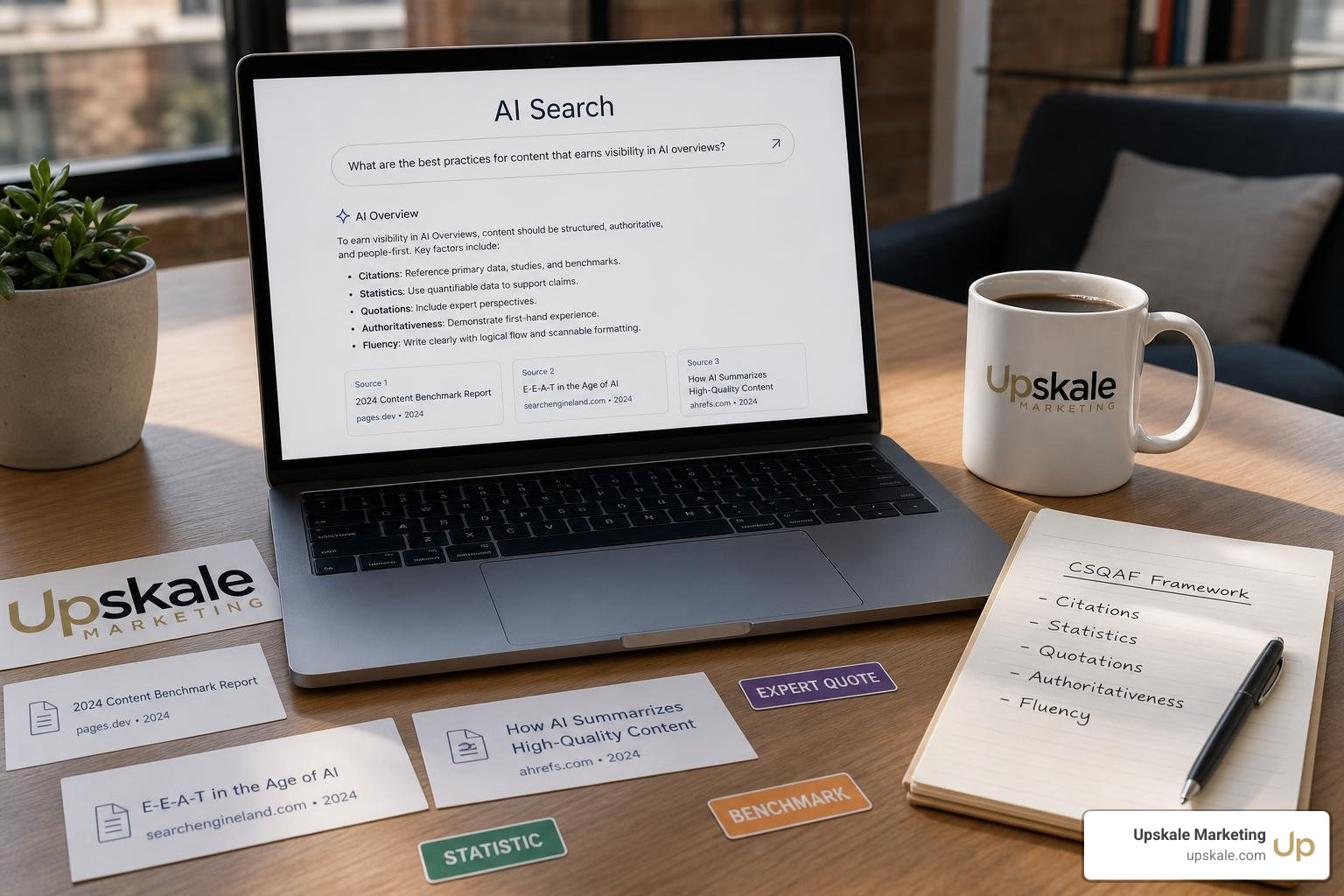
Clear structure and credible supporting material can make a page more useful, but they do not guarantee inclusion in AI overviews. As an editorial checklist—not an answer-engine requirement—we suggest CSQAF:
- Citations: Direct references to primary data, clear studies, and established industry benchmarks.
- Statistics: Quantifiable figures that reinforce your claims.
- Quotations: Verifiable perspectives from recognized subject matter experts.
- Authoritativeness: Clear demonstrations of direct, first-hand experience.
- Fluency: Logical transitions, scannable bullet points, and concise introductory paragraphs.
By using AI tools to refine metadata, draft descriptive subheadings, and place direct answers near the start of relevant sections, you can make content easier for readers and search systems to understand.
Open-Source Agents and Automation for Technical SEO
One option for marketing teams is open-source, self-hosted AI automation. Technical marketers can run AI automation tools on infrastructure they manage, with technical support for setup and maintenance.
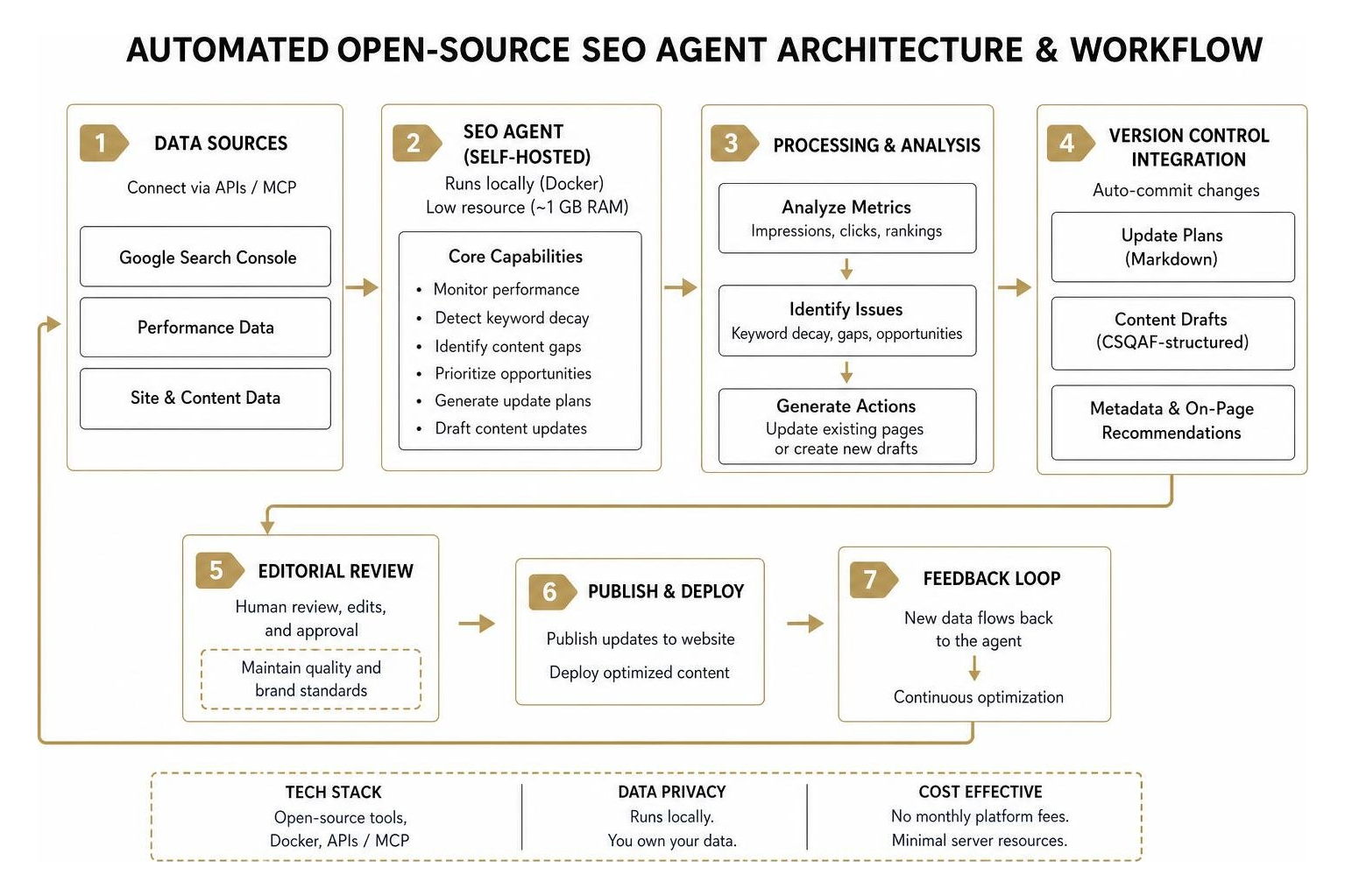
Some self-hosted tools can connect to Google Search Console, monitor search performance, and submit proposed content changes for review. Capabilities depend on the tool and its configuration.
Self-hosting can give your team more control over where data is stored, but hardware needs and data handling depend on the software and connected services.
Optimizing Content for Generative Engines and AI Citations
AI Optimization is the broader work of making a business understandable, credible, and discoverable in AI-assisted search. Answer Engine Optimization (AEO) focuses on answering customer questions clearly; Generative Engine Optimization (GEO) focuses on helping a brand’s information become useful source material for generated answers. These practices overlap with SEO. AI visibility means whether, where, and how accurately a business appears in relevant AI answers. For example, a business can examine whether it is mentioned when customers ask about its services, whether its details are accurate, and whether its website is cited. Being mentioned or cited can create another opportunity for customers to discover your business. Visibility can vary by platform and question and does not guarantee leads or sales.
The following practices support useful content and a credible online presence; they are not a universal checklist for AI citation:
- Experience and credibility: Clear author bios, verifiable credentials, and relevant experience help readers evaluate advice. E-E-A-T stands for experience, expertise, authoritativeness, and trustworthiness; it is not an AI certification.
- Unambiguous Direct Answers: Direct answers make it easier to identify the information that addresses a question.
- Brand reputation and online presence: Consistent brand mentions across reputable third-party platforms, authentic reviews, and user-generated testimonials can support a credible reputation across the broader web.
- Original Media: Relevant videos, original charts, and clearly explained graphics can demonstrate first-hand knowledge and provide useful supporting information.
A consistent, credible online presence can support discoverability in AI-assisted search. You can explore deeper strategies on winning the citation game with AI search & brand mentions to understand how consistent, credible references across the web can strengthen your business’s reputation and discoverability.
Adapting Your Workflow for Agentic Browsers and AI Assistants
Search is expanding beyond static search bars into AI-assisted browsing that can carry out tasks for users. Some integrated AI assistants can read live pages, perform research, and complete transactions with user authorization. Capabilities vary by platform.
Clear page structure and appropriate technical settings can help automated assistants interpret and use your website:
- Semantic HTML & ARIA Attributes: ARIA accessibility attributes, which label interface elements, and HTML that identifies elements such as headings, navigation, and forms support accessibility and can help automated assistants interpret interactive elements and form fields.
- Appropriate Schema Markup: Using appropriate structured-data labels for page information, such as products or organization details, can help supported search systems interpret information about your organization, products, and services.
- Crawler access rules: Use appropriate settings, such as robots.txt directives, to communicate which automated crawlers may access content. These directives are not a substitute for security controls; access settings should also account for indexing and bandwidth needs.
- Answer-Focused Content Blocks: Distinct, self-contained questions and answers can make key facts easier for readers and automated assistants to identify.
For an in-depth look at emerging developments in this area, review our AI search optimization insights to see how agent-driven discovery is changing online visibility.
Frequently Asked Questions About AI Tools for SEO Optimization
What are the main benefits of using AI tools for SEO?
AI tools can speed up time-consuming marketing tasks. They can help small teams and individual creators brainstorm content topics, analyze sets of Search Console search terms, group keywords by search intent, and draft page titles and descriptions for review. Supporting preliminary research and drafting can give your team more time to refine technical performance, add original case studies, and engage directly with your audience.
How do open-source AI tools handle data privacy in SEO tasks?
Data privacy depends on the tool, its hosting, and its settings. Web-based tools vary in how they store inputs and use them for model training. Do not submit confidential information unless your organization has confirmed appropriate privacy protections and account settings.
Self-hosted tools can run on infrastructure your organization controls. However, connected services or remotely hosted AI models may still receive data, so confidentiality depends on the configuration, access controls, and integrations.
Can AI tools help optimize for AI Overviews and answer engines?
Yes. AI tools can help reorganize long content into clear, scannable answers. They can suggest common industry questions, draft concise answers, support the CSQAF editorial checklist, and draft structured data for technical review and validation. These changes can make information easier to understand, but they do not guarantee that an AI answer engine will cite your website.
Conclusion: Scaling Your Search Visibility with AI
AI tools can support marketing teams by reducing repetitive work and helping organize web content. However, simply using tools to produce more pages is not enough to build lasting visibility in unpaid search.
As search engines, generative models, and agentic assistants continue to evolve, building lasting visibility calls for a coordinated approach to AI optimization. That means combining a well-organized website, accurate structured data, demonstrated expertise, and credible references across the web.
At Upskale Marketing, based in Orlando, Florida, we combine decades of strategic marketing expertise with modern search practices to help businesses strengthen their visibility across AI platforms, including ChatGPT, Gemini, and Copilot. Rather than relying on shortcuts or generic automation, we help brands make their expertise and business information clear, credible, and easier to discover in traditional and AI-assisted search.
If you want to get a straightforward, data-driven assessment of where your business stands in AI search, its current visibility, and potential improvement opportunities (no guarantees), schedule a free AI evaluation with our team today.