


Practical Ways to Prep Every Page for Conversational AI
Start With an AI Search Optimization Checklist That Makes Pages Easy to Cite
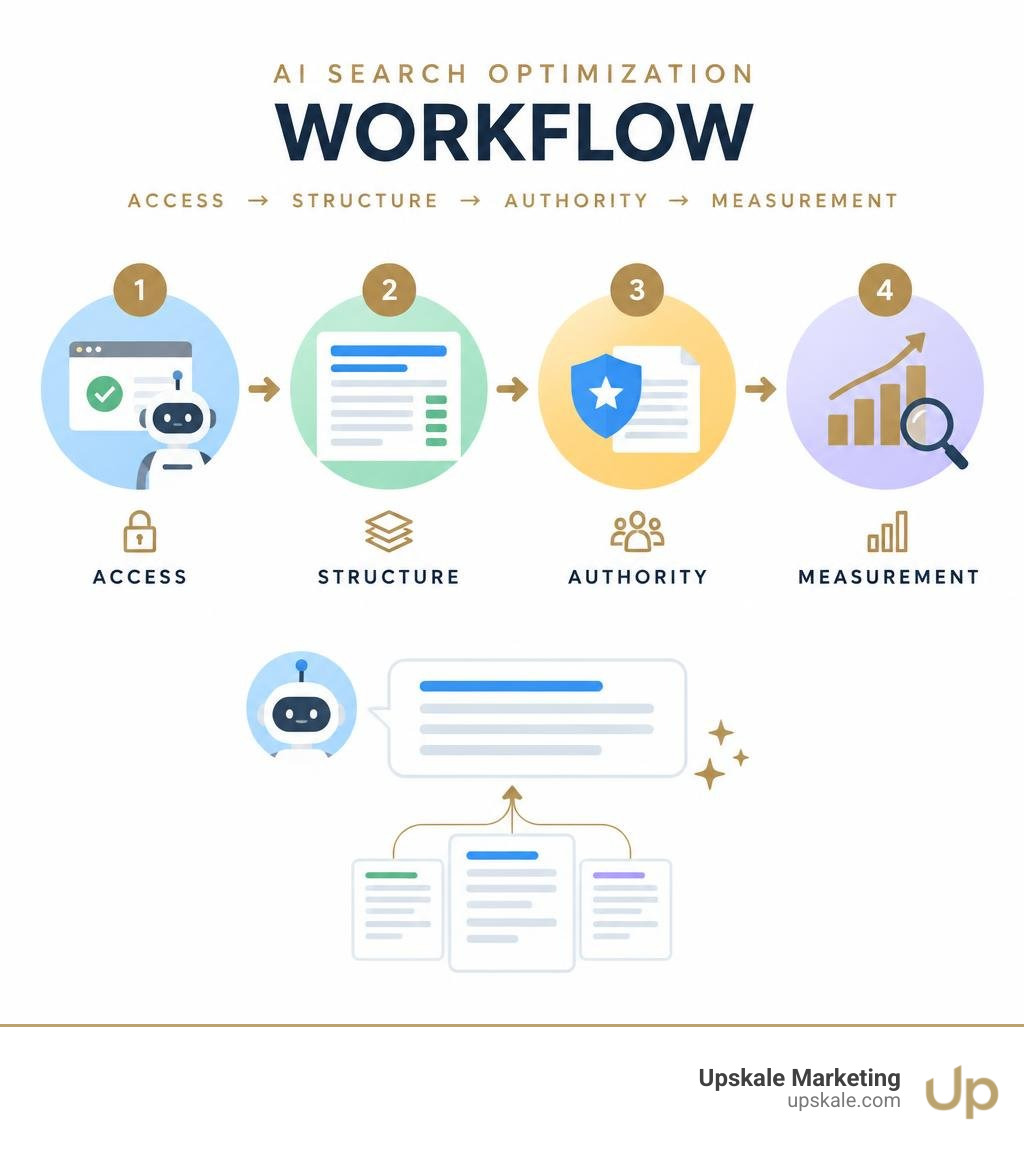
An AI search optimization checklist helps you prepare each page to be found, understood, and cited by conversational AI tools. Start with these four checks:
- Confirm relevant search and AI retrieval systems can access and read the page.
- Answer the page’s main question clearly near the beginning.
- Use clear headings, short paragraphs, lists, and tables that make information easy to understand.
- Support important claims with current sources, named authors, dates, and relevant schema markup—machine-readable descriptions of the page, business, or author.
Traditional SEO remains important, but AI answer engines may combine information from several sources rather than simply return ranked links. Clear content, supporting evidence, consistent business identity details, and pages that search systems can access and read help make information useful for these answers.
AI Optimization is the broader discipline of improving how a business is found and represented in AI-assisted search. Answer Engine Optimization (AEO) focuses on making information useful for direct answers; Generative Engine Optimization (GEO) focuses on visibility in answers assembled by generative AI. These approaches overlap. AI visibility means whether, how often, and how accurately a business appears in relevant answers, including mentions and citations. For business owners, this matters because those answers can shape which providers buyers consider; visibility alone does not guarantee leads or sales.
This guide walks through the practical page-level checks that help your content earn consideration when prospects ask conversational AI for recommendations, comparisons, and expert guidance.
Upskale Marketing brings decades of experience in marketing, branding, sales, strategy, and technology to helping businesses strengthen their visibility in AI search.
Core Differences: Traditional Search vs AI Answer Engines
Traditional search engines index web pages and return ranked results relevant to a user’s query. Generative answer engines produce conversational responses. Depending on the platform and query, they may combine retrieved web information with information learned during training; their answers are not necessarily accurate or authoritative.
When a potential buyer asks a conversational engine for product recommendations or strategic advice, keyword repetition alone does not make content useful. When web retrieval is used, the system may select relevant passages and combine them into an answer; a citation does not by itself establish that a source is trustworthy.
Understanding these mechanics is essential for modern brands. To dive deeper into these shifts, explore our advanced insights on AI search.
| Feature / Factor | Traditional SEO | Generative AI Answer Engines |
|---|---|---|
| Primary Goal | Rank individual web pages in the top 10 search results | Earn inclusion and citations within AI-generated answers |
| User Experience | Scrolling and clicking through lists of links | Conversational dialogue and direct answers |
| Content Evaluation | Relevance, quality, links, and other ranking signals | Relevance and usefulness of available information; selection methods vary by platform |
| Formatting Focus | Title tags, meta descriptions, and keyword placement | Direct answers first (bottom line up front), clean lists, structured tables, and FAQs |
| Technical Priority | Pages that search engines can discover, read, and index | Accessible, readable information for relevant retrieval systems; access policies vary by business and platform |
What Makes a Page Useful for AI Search?
Clear page organization and consistent business details help people and search systems understand your content. Readable, well-supported information is easier to evaluate and reference, though it does not guarantee an AI citation.
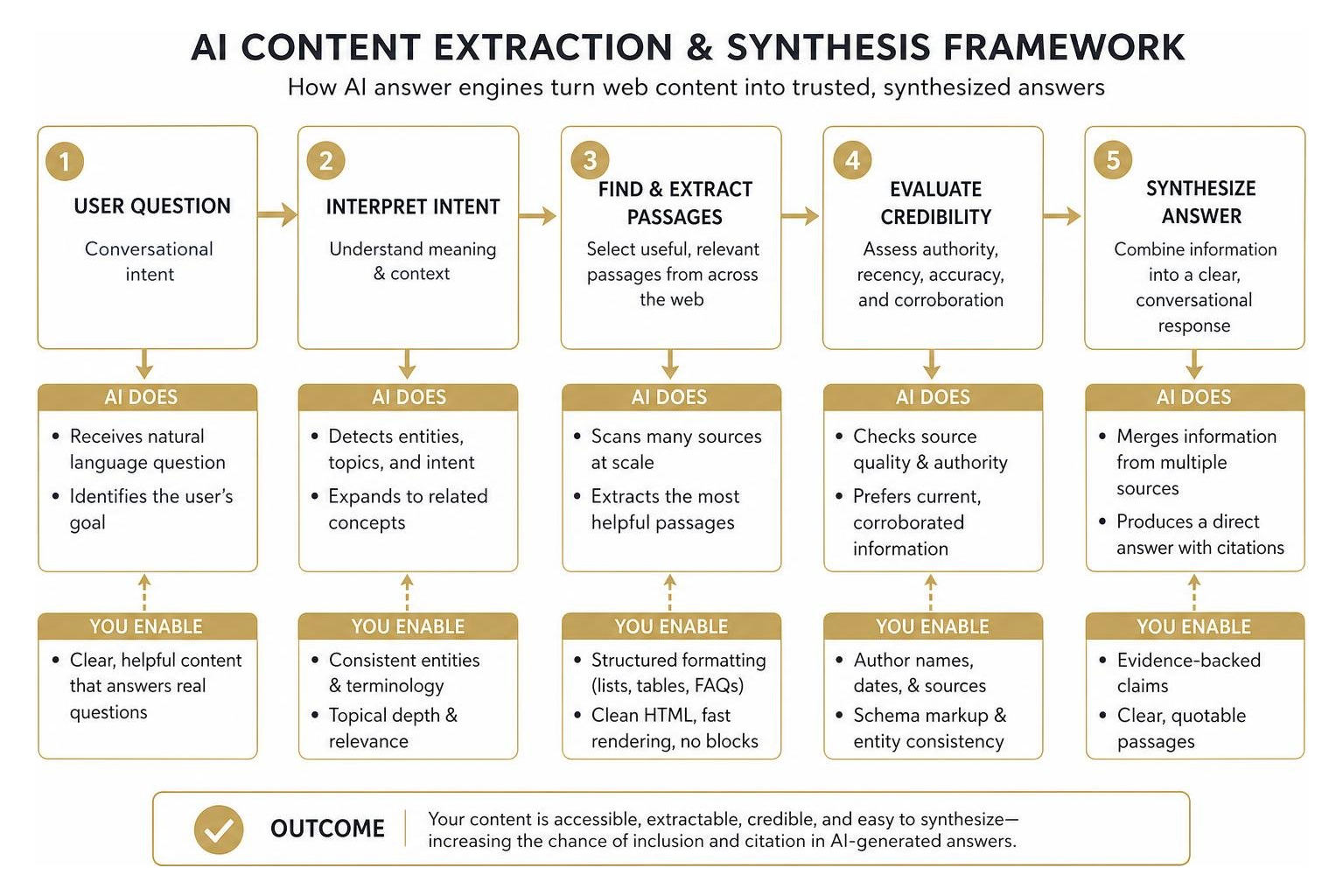
An assessment considers three related questions: Can search systems read the page? Does it clearly answer buyers’ questions? Is the business’s identity and expertise supported by credible information elsewhere?
Can Search Systems Access and Understand Your Pages?
For web-based answers, a page needs to be discoverable and readable by the relevant retrieval system; the AI platform does not necessarily crawl it directly. Technical accessibility is an important part of assessing a website. You can also explore our dedicated hub on AI SEO to learn more about how a website’s accessibility and structure affect discovery.
- Access: Crawling is automated discovery of web pages. Access restrictions can affect whether search systems find public content; access policies also need to reflect the business’s needs.
- Readable content: Rendering turns page code into readable content. Important information must be accessible to the systems retrieving it.
- Performance: Responsive pages improve the visitor experience, but speed alone does not secure AI citations.
- Structured data: Schema markup is machine-readable information describing a business, page, or author. It can clarify those details without guaranteeing inclusion in an AI answer.
Does Your Content Clearly Answer Buyers’ Questions?
Clear, self-contained answers are easier for search systems to select and quote. A page should answer relevant buyer questions with enough context to remain useful when a passage is read on its own. Whether it appears in an AI overview or chat response depends on the platform and query.
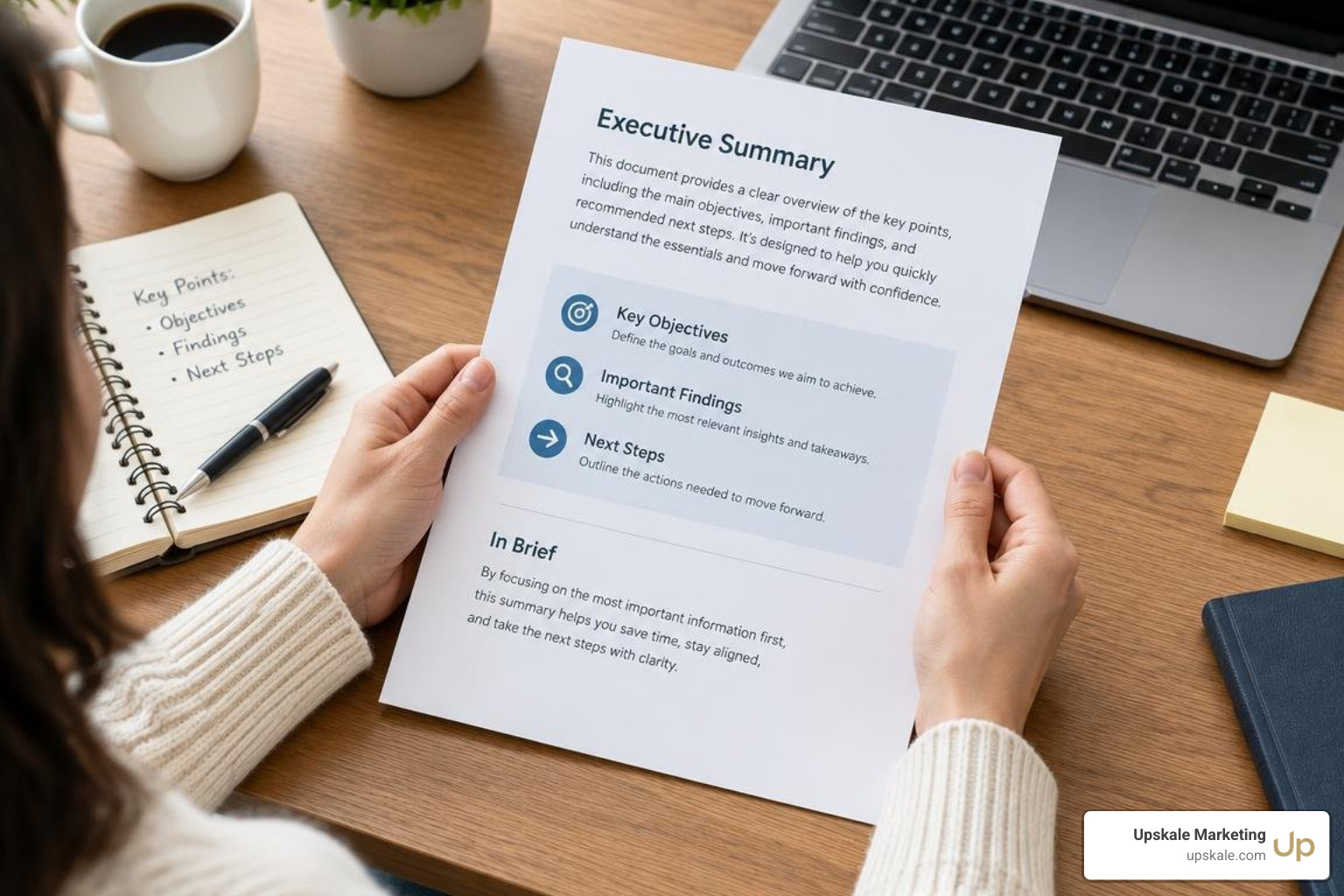
Clear content gives a direct answer before elaborating, organizes information around buyers’ questions, and identifies the sources and dates behind important claims. Lists, tables, and brief summaries can make complex information easier for people and search systems to understand.
Is Your Business Identity and Expertise Credible?
Consistent business information and credible independent references can help search systems distinguish your organization and support its claims. They do not guarantee that AI answers will describe the business accurately. For more on this, read our guide on winning the citation game with AI search brand mentions.
Consistent business names, leadership details, and locations help distinguish your organization from similarly named businesses. Author credentials and reliable references help readers evaluate expertise. Machine-readable descriptions can clarify business identity, while independently supported claims provide stronger evidence than unsupported self-promotion.
How Should Businesses Interpret AI Visibility Assessments?
Evaluating AI visibility requires clear questions, documented observations, and an understanding of the limits of the evidence.

Several limitations matter when interpreting how AI systems describe a business:
AI answers can vary across repeated questions, platforms, and wording, so a single response is not a reliable picture of visibility. Some answers use retrieved web information, while others draw on information learned during training. A useful assessment considers whether the business is mentioned, whether sources are cited, and whether service details are accurate. Incorrect or invented details are evidence of a visibility problem, not proof of its cause.
Measuring Conversational AI Performance and Citation Rates
Measuring visibility in conversational discovery differs from tracking traditional organic keyword rankings. Because AI engines assemble synthesized answers, tracking must account for brand presence within conversational flows.
Useful measures include identifiable visits from AI platforms, business mentions and source links in relevant answers, how the business is described, and the accuracy of quoted service details. These measures answer different questions: mentions indicate exposure, descriptions show positioning, and website visits reveal only the traffic that can be identified. None alone establishes business growth.
Frequently Asked Questions about AI Search Optimization
For additional insights into generative discovery and technical preparation, browse additional answers in our FAQs.
What is the most critical item on an AI search checklist?
Accessibility and clear answers are important starting points: relevant retrieval systems need readable content, and buyers need a direct answer to their question. A bottom-line-up-front (BLUF) approach puts that answer before supporting detail. Inaccessible or unclear content can be harder for retrieval systems to use, but source selection varies by platform and query.
How does conversational AI evaluate source credibility?
There is no single credibility test shared by all conversational platforms. Relevant sources, clear authorship, consistent business information, and supported claims can help establish credibility, but an AI answer or citation does not certify accuracy.
How frequently should pages be audited for AI search readiness?
A quarterly review can be a practical starting point for priority pages, with earlier updates when services, facts, or business details change. The appropriate cadence depends on how quickly the information changes; a fixed schedule does not ensure accuracy.
Conclusion
Succeeding in generative search requires a disciplined approach to relevance, clarity, and authority. By implementing an AI search optimization checklist, you can identify gaps in accessibility, structure, and evidence that may affect your content’s eligibility for citations when buyers turn to conversational tools for answers.
At Upskale Marketing, an Orlando, Florida AI optimization agency, we help business leaders navigate this evolving search landscape. We help businesses develop AI search as a potential growth channel by strengthening their online information, content clarity, and brand credibility.
If you are ready to evaluate how conversational tools see your business, consider scheduling a complimentary AI evaluation with Upskale Marketing. Our team provides an objective, data-backed assessment of your current visibility across AI platforms, pinpointing specific opportunities to elevate your strategy with complete AI optimization.