


Top Solutions for AI Visibility: Buyer Comparison for Enterprise Teams
Choose GEO Solutions That Turn AI Mentions Into Measurable Growth
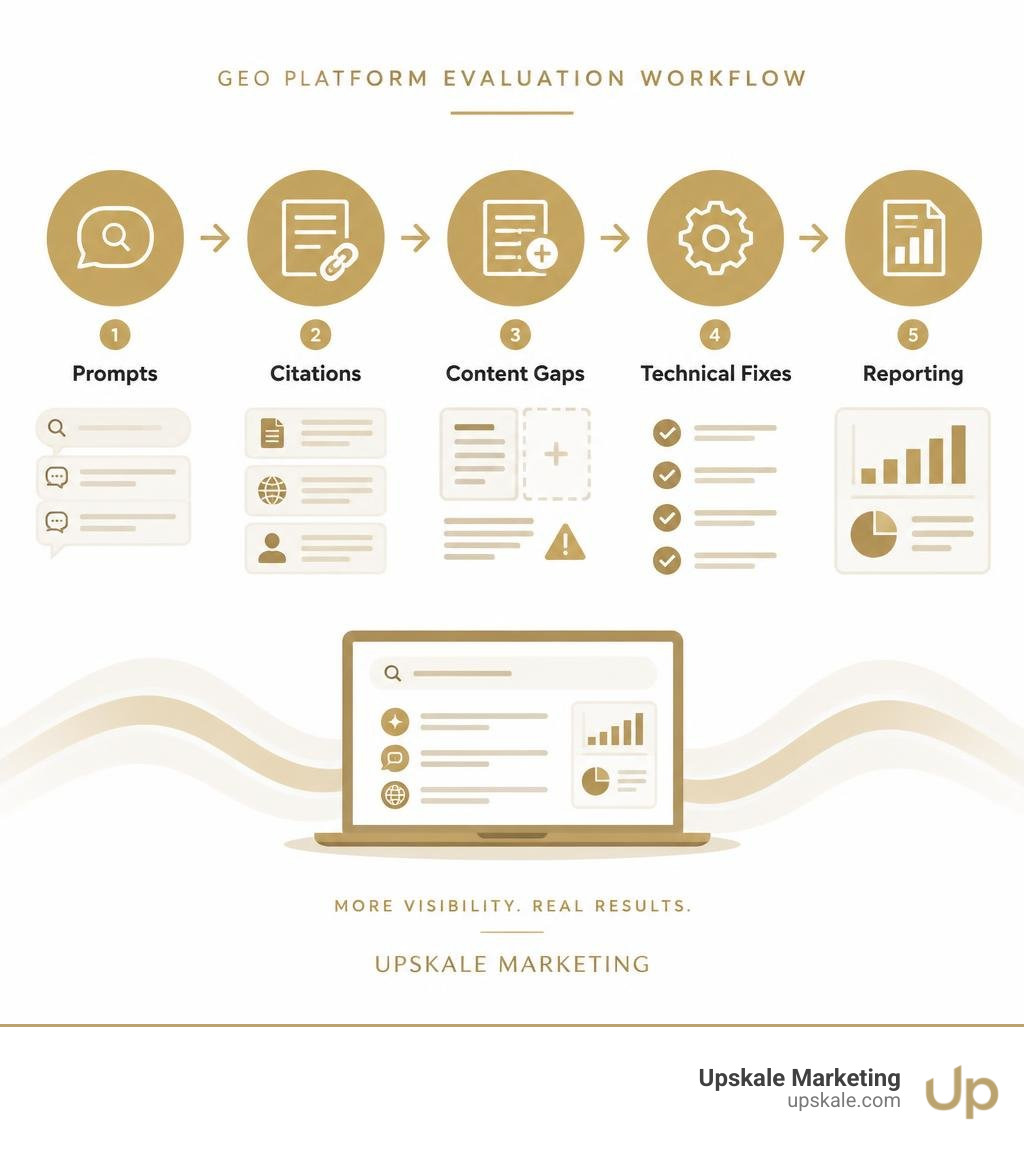
The top solutions for AI visibility and generative engine optimization help enterprise teams do four things well:
- Track the prompts buyers use in AI search tools.
- Measure brand mentions, citations, sentiment, and competitor share of voice.
- Find the pages and third-party sources AI systems rely on for answers.
- Turn gaps into practical work: stronger content, clearer structured data, better technical performance, and credible authority signals.
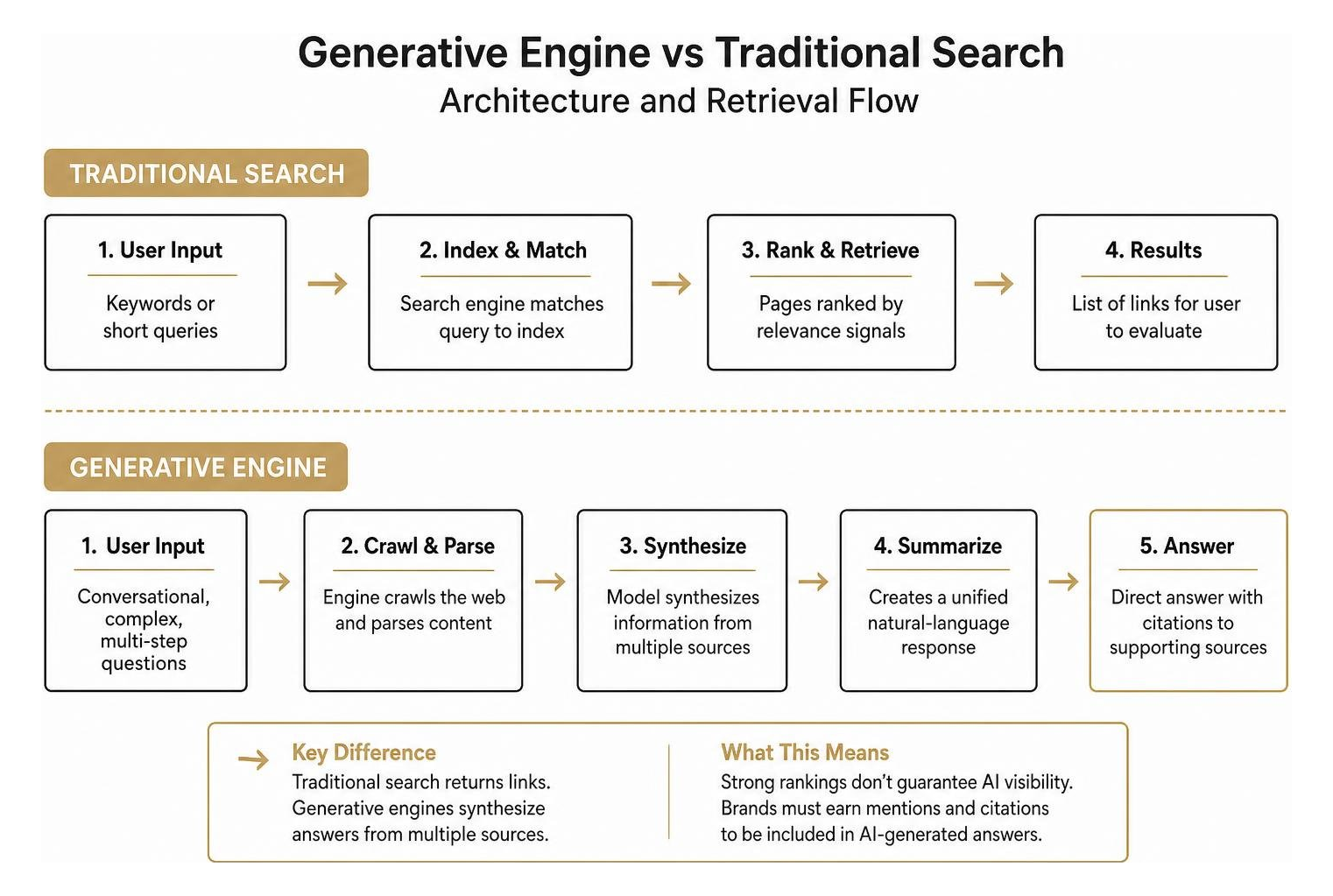
Traditional SEO still matters, but generative engines do more than rank links. They synthesize answers from multiple sources. That means a company can have strong organic rankings yet be absent when a buyer asks an AI assistant, “Which provider should I choose?” The right GEO platform should reveal that gap across relevant AI engines, not just report a generic visibility score.
For mid-size teams, the best approach is not to chase AI tricks. Build pages that are fast, mobile-friendly, secure, easy to understand, and supported by accurate first-party expertise. With more than half of website traffic coming from organic search and mobile accounting for 60% of searches, the technical SEO foundation remains essential to AI visibility.
I am Scott Brazdo, MBA, founder and CEO of Upskale Marketing, with more than 30 years of experience in marketing, branding, and digital strategy. I help organizations evaluate the top solutions for AI visibility and generative engine optimization while building the authority, content, and measurement systems needed to earn durable AI-search visibility.
Understanding GEO: How Generative Engines Differ from Traditional Search
The modern digital landscape has experienced a fundamental transformation. For decades, search engines functioned primarily as discovery indexes: a user typed in a set of keywords, an algorithm matched the query against an index, and the user was presented with a list of blue links to evaluate independently.
Generative Engine Optimization (GEO) operates on an entirely different premise. Instead of indexing pages to return a collection of links, generative models crawl, parse, synthesize, and summarize web content to deliver a unified, natural-language response. When modern buyers interact with AI assistants, they do not just enter short-tail keywords; they ask complex, conversational, multi-step questions.
To adapt, businesses must look beyond simple keyword targeting. Exploring advanced AI SEO strategies allows organizations to structure their digital footprint so that large language models (LLMs) can reliably extract context, verify facts, and cite their brand as the definitive answer.
The Shift from Keyword Rankings to Brand Mentions and Citations
In traditional organic search, the primary objective is winning top rank on a static results page. In the generative era, success is defined by brand mention frequency, citation depth, and entity authority.
Generative engines use multi-source query fan-out. When an AI receives a complex prompt, it breaks that prompt into multiple sub-queries, evaluates dozens of digital sources simultaneously, and compiles an answer. During this process, the engine determines which brands to name directly and which URLs to cite as authoritative evidence.
Being left out of this synthesized response means your organization is eliminated from the buyer’s consideration phase before they ever click through to a single website. Visibility is no longer a binary measure of position one through ten; it is about establishing digital signals strong enough that LLMs consistently select your content during answer generation.
Technical Foundations: Web Performance, Security, and LLM Crawlers
While generative engines digest information differently than traditional web crawlers, their foundational requirements for data access remain grounded in web development best practices:
- Page Speed and Core Web Vitals: Speed directly influences crawl efficiency and user satisfaction. Research indicates that 53% of mobile users abandon a website if it takes longer than 3 seconds to load. When AI systems use live retrieval to pull sources, slow response times can lead to crawler timeouts, causing content to be bypassed during real-time answer generation.
- Mobile Responsiveness: With 60% of all online searches taking place on mobile devices, responsive layouts are non-negotiable. Websites that implement responsive design experience an average 15% increase in organic traffic. Responsive architecture ensures that clean, uncluttered HTML is delivered across all user agents, simplifying the extraction process for LLM bots.
- Crawl Management and Access Policies: Maintaining a well-configured
robots.txtfile ensures that discovery bots can access valuable educational content while protecting internal endpoints, administrative directories, and proprietary environments. - User Experience (UX): Thoughtful UX improvements can elevate conversion rates by up to 400%. When generative engines direct users to your landing pages, intuitive navigation and clear information architecture ensure those visitors convert into lasting business relationships.
Evaluating the Top Solutions for AI Visibility and Generative Engine Optimization
Selecting software solutions to monitor and enhance enterprise AI presence requires looking beyond legacy SEO tools. Traditional rank trackers monitor rank positions on keyword sets; enterprise GEO solutions track dynamic conversational prompts across major generative engines, mapping the intricate web of citations that produce those answers.

When enterprise teams evaluate the market for generative visibility software, they typically assess platforms across several operational categories:
| Solution Category | Primary Enterprise Use Case | Key Capabilities | Best Suited For |
|---|---|---|---|
| Prompt Intelligence Platforms | Tracking brand presence across conversational prompts | Prompt discovery, multi-engine tracking, share of voice calculation, competitor visibility auditing | Marketing leaders tracking brand reach across generative engines |
| Citation and Source Mapping Tools | Auditing third-party and owned domains cited by AI | Citation source classification, domain authority scoring, referral path analysis | Content teams prioritizing PR, off-page authority, and digital mentions |
| Enterprise AI Readiness Suites | Technical infrastructure and structured data audit | Schema validation, vector retrieval readiness, semantic entity mapping | Technical SEOs and enterprise web development teams |
| Integrated Brand Sentiment Analytics | Evaluating contextual positioning in AI answers | Semantic sentiment scoring (-100 to +100), brand attribute tracking, hallucination monitoring | Brand integrity, corporate communications, and PR teams |
Finding the top solutions for ai visibility and generative engine optimization means matching your organization’s internal workflows with tools that provide direct, actionable intelligence rather than passive metrics.
Core Software Features in Top Solutions for AI Visibility and Generative Engine Optimization
Enterprise-grade generative search software must provide deeper insights than traditional search consoles. When auditing potential tools, look for these foundational features:
- Multi-Engine Prompt Auditing: The ability to run automated prompt clusters across diverse platforms—such as ChatGPT, Gemini, Perplexity, and Copilot—capturing the exact synthesized text and citations generated for each platform.
- Sentiment and Context Scoring: Generative engines do not merely list your brand; they describe it. Software should evaluate brand mentions on a structured scale (such as -100 to +100) to ensure your solutions are recommended with positive sentiment and accurate context.
- Citation Source Dissection: Clear segmentation showing whether AI engines are citing owned domains, independent industry reviews, digital PR assets, or user-generated forums.
- Competitor Share of Voice: Comprehensive dashboards demonstrating how often your competitors are recommended for core industry solutions compared to your brand.
For teams looking to operationalize these capabilities, reviewing actionable AI search optimization insights helps translate raw prompt data into meaningful marketing campaigns.
Implementation Frameworks Across Top Solutions for AI Visibility and Generative Engine Optimization
Acquiring a software solution is only the first step; successful adoption depends on how effectively your team integrates its findings into your digital infrastructure:
- Automated Remediation Workflows: When a platform identifies that a critical product capability is missing from AI summaries, your content workflow should automatically trigger an update to targeted documentation, whitepapers, or knowledge-base articles.
- Structured Semantic Enrichment: Deploying schema markup—such as
Article,Organization,Product, andFAQPage—clarifies relationships between entities, making your content easy for retrieval models to parse and ingest accurately. - Unified Metadata Containers: Implementing clean, standardized metadata models across your content management system ensures that every published asset carries verifiable author credentials, date stamps, and structured entity tags.
Enterprise Data Structuring, E-E-A-T, and Security Controls
Generative systems prioritize clear context, credible authority, and consistent factual corroboration. To remain a trusted source, enterprises must structure their data so that LLMs can index and synthesize it without misinterpretation.

Optimizing Content Architecture and Citation Provenance
For an AI system, recommending a brand requires trust. AI models rely on established principles of Experience, Expertise, Authoritativeness, and Trustworthiness (E-E-A-T) to assess whether a piece of content is suitable to cite.
To build citation-worthy content:
- Publish Original Research and Data: Generative models actively seek primary sources. By publishing original surveys, proprietary datasets, and detailed case studies, you establish your website as the root citation for industry statistics.
- Implement Author Credibility Frameworks: Include detailed author biographies, professional credentials, and direct links to established external profiles for all contributors. LLMs cross-reference author entities across the web to confirm subject matter expertise.
- Maintain Structural Clarity: Use descriptive, logical subheadings, straightforward definitions, and clear data tables. When information is arranged logically, generative engines can extract precise answers for user prompts without hallucination or confusion.
Balancing Generative Visibility with Enterprise Security
Expanding your brand’s AI visibility should never come at the expense of corporate data security. When opening pathways for generative search engines, enterprise teams must establish clear governance boundaries:
- Defensive Bot Governance: Ensure your web application firewalls (WAF) and perimeter defenses distinguish between legitimate AI search crawlers that drive brand discovery and unvetted scrapers attempting to harvest proprietary data or intellectual property.
- Access Control and Sensitive Data Protection: Sensitive internal databases, staging environments, and customer portal records must be shielded from indexing using strict authentication protocols, zero-trust network access, and precise server-level access rules.
- Monitoring Crawler Loads: Track server metrics to ensure that aggressive AI crawling does not degrade website performance, drain server resources, or slow down digital experiences for real prospective clients.
Key Metrics: Measuring Success in Answer Engine Optimization
Transitioning to GEO requires expanding your performance dashboards. Traditional metrics like overall organic impressions and rank position provide an incomplete picture of conversational discovery.
Enterprise teams should focus on these core generative search KPIs:
- AI Brand Visibility Score: The percentage of tracked industry prompts in which your brand is actively mentioned in the generated answer.
- Citation Share of Voice: The ratio of citations your owned domains and verified PR assets receive in AI answers compared to direct competitors.
- Contextual Sentiment Score: A normalized metric tracking the sentiment of brand descriptions across generative platforms, ensuring your organization is presented favorably and accurately.
- AI Referral Traffic and Engagement: High-intent traffic originating directly from citation links within AI platforms, measured through specialized web analytics tagging and attribution modeling.
- Assisted Conversion Impact: The velocity and conversion rate of prospects who consult generative engines during their evaluation phase, demonstrating how AI recommendations support your sales pipeline.
Frequently Asked Questions About Generative Engine Optimization
What is the primary difference between SEO and GEO?
Traditional SEO focuses on optimizing web pages to rank as individual links in search engine results pages based on specific keyword queries. Generative Engine Optimization (GEO) focuses on structuring content and digital authority so that AI assistants and large language models extract your information, summarize your capabilities, and cite your brand as a primary source within natural-language answers.
How do enterprise teams measure brand visibility in LLM responses?
Enterprise teams measure visibility by tracking curated clusters of industry-specific conversational prompts across major AI engines. Visibility is quantified through brand mention frequency, citation share, competitor share of voice, and semantic sentiment scoring of the generated output.
Can AI crawlers pose data security risks to enterprise websites?
Yes. Unregulated crawlers can consume excessive server bandwidth, attempt to scrape proprietary intellectual property, or index staging environments if proper access controls are not enforced. Organizations should use robust web application firewalls, verify crawler user agents, and maintain clear server access permissions to safeguard internal systems.
Conclusion
Succeeding in the era of generative discovery requires an intentional, multi-disciplinary approach. Enterprise visibility is no longer just about optimizing metadata for a search engine’s index; it is about establishing verifiable authority, maintaining technical website excellence, structuring data for seamless extraction, and proactively monitoring how your brand is presented across generative AI platforms.
At Upskale Marketing, we bring decades of digital marketing leadership together with dedicated AI search optimization expertise. Located in Orlando, Florida, our team helps forward-thinking organizations build long-term digital authority and turn conversational discovery into a dependable growth channel through comprehensive end-to-end AI optimization.
To see how your brand appears across generative engines, identify citation gaps, and uncover practical opportunities to improve your presence, schedule a free AI evaluation with our team today.