


AI Search Optimization: Practical Techniques to Stand Out in AI Overviews
Why AI Search Optimization Matters for Your Visibility
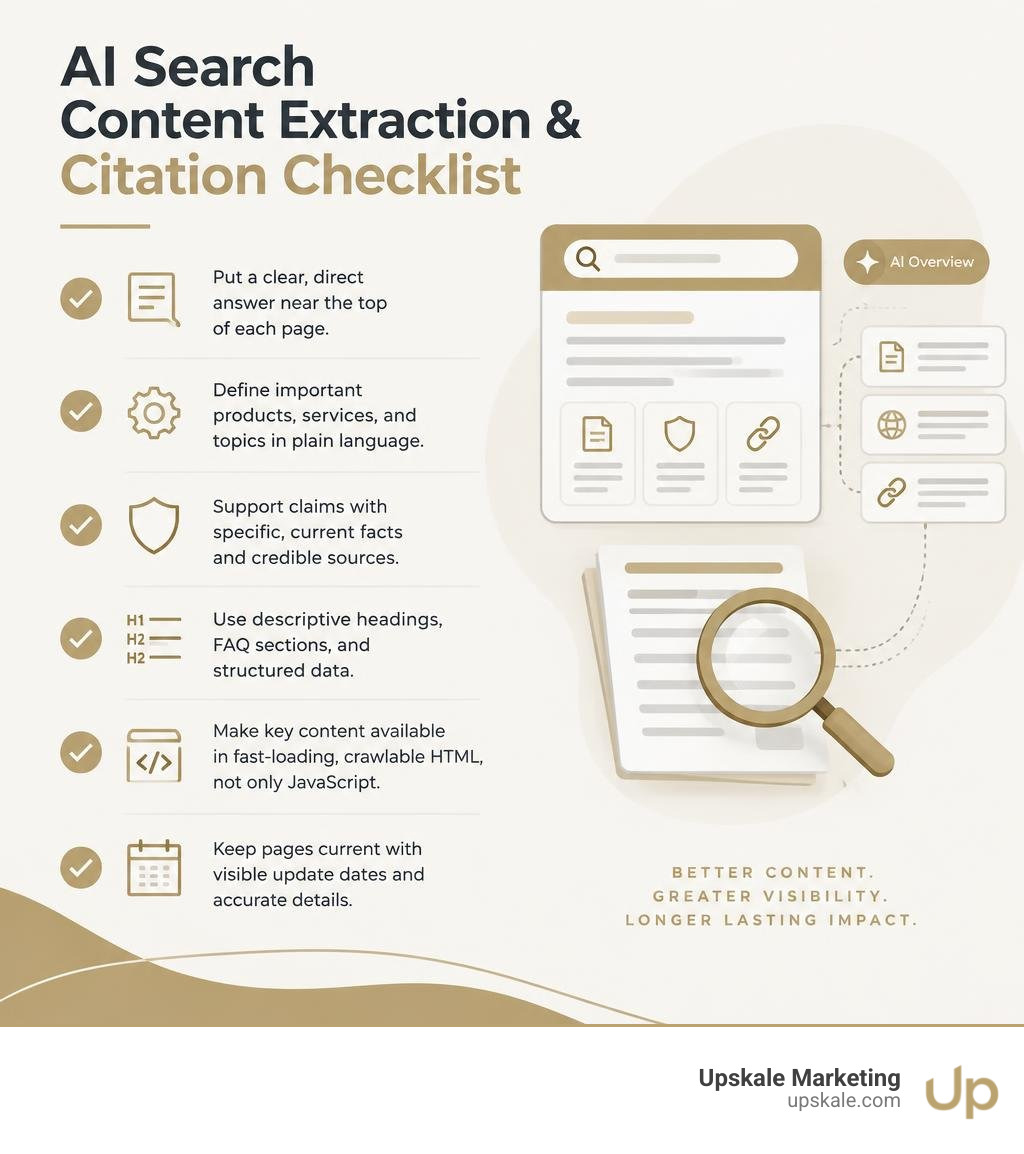
Use these AI search optimization tips to make your content easier for AI Overviews and answer engines to find, understand, and cite:
- Put a clear, direct answer near the top of each page.
- Define important products, services, and topics in plain language.
- Support claims with specific, current facts and credible sources.
- Use descriptive headings, FAQ sections, and structured data.
- Make key content available in fast-loading, crawlable HTML, not only JavaScript.
- Keep pages current with visible update dates and accurate details.
AI search is not a shortcut around good marketing. It is an extension of it. AI systems need clear entities, useful answers, trustworthy evidence, and accessible technical foundations before they can confidently include a brand in a generated response.
That matters as more searches end without a traditional click. Your goal is not simply to rank a page. It is to become a source an AI system can extract, summarize, and cite when a prospective customer asks for help.
I am Scott Brazdo, MBA, founder and CEO of Upskale Marketing. With more than 30 years in marketing, branding, and business strategy, I help companies apply practical ai search optimization tips that build lasting relevance, authority, and visibility as customer search behavior changes.
Core AI Search Optimization Tips for Maximum Visibility
Modern discovery has transformed how prospective buyers find solutions. The rapid growth of generative answer engines—such as ChatGPT, Google AI Overviews, Perplexity, and Microsoft Copilot—has fundamentally shifted user behavior. Instead of scanning a page of ten blue links, searchers increasingly receive synthesized, multi-source answers directly inside the interface.
Industry research highlights that roughly 60% of Google searches now resolve as zero-click queries, where users find their answers directly on the results page. In addition, forecasts indicate that conversational assistants and generative engines continue to capture a growing share of overall discovery. To remain visible, brands must implement dedicated AI optimization strategies that position their digital assets for direct retrieval and citation.
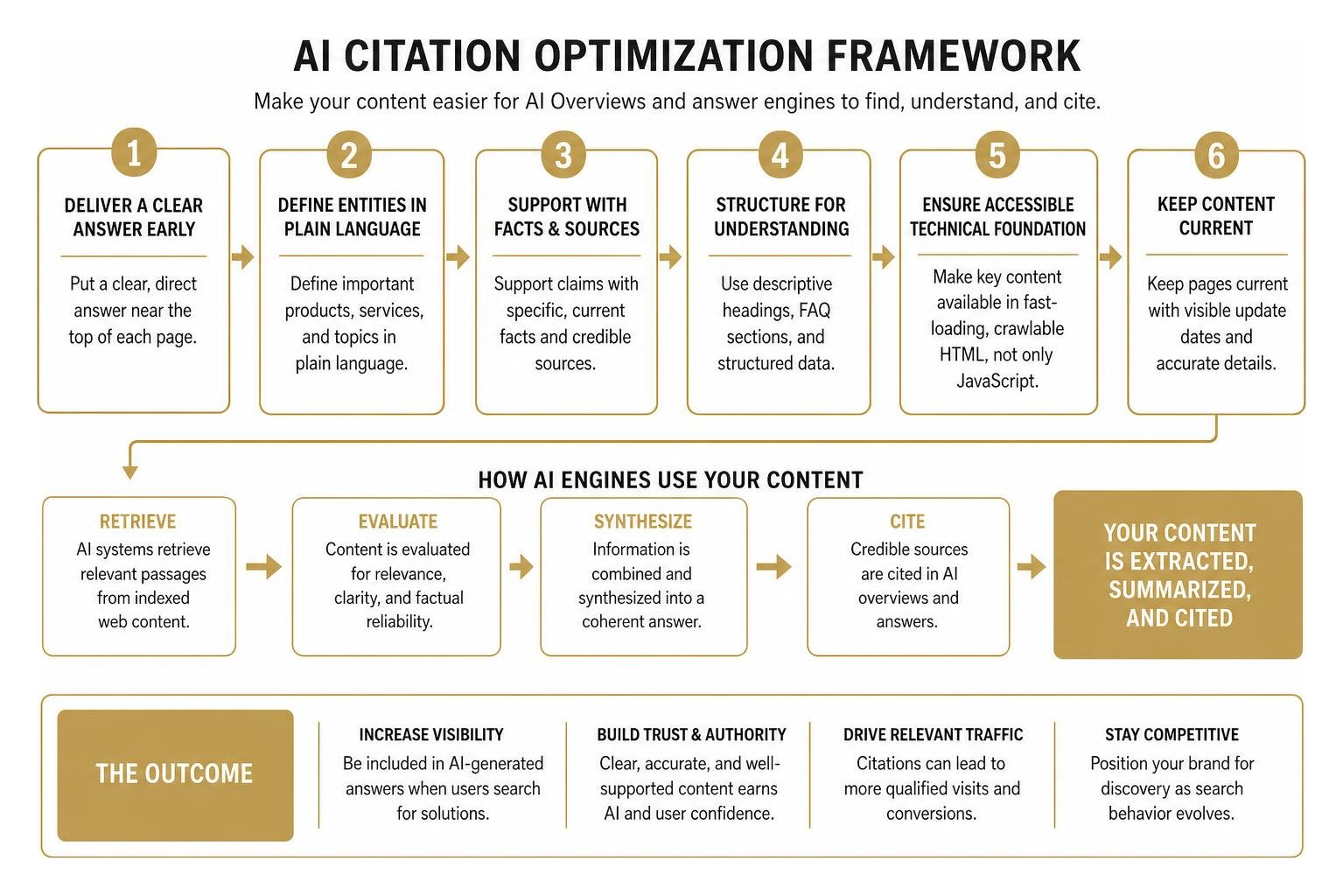
When an AI engine processes a prompt, it relies on Retrieval-Augmented Generation (RAG). The system fetches relevant text passages from indexed web documents, evaluates their factual reliability, and synthesizes them into a coherent answer. Optimizing for this environment requires clear entity definitions, structured content blocks, and verifiable digital signals.
Structural AI Search Optimization Tips for Entity Extraction
Generative models rely on entity recognition to understand who you are, what you offer, and how your solutions connect to a user’s problem. When your content is ambiguous, conversational engines simply bypass it in favor of clearer sources.
- Lead with Concise Entity Definitions: Position a direct, 40-to-50-word definition immediately beneath your primary section headings. State clearly what the concept, service, or product is, how it operates, and why it matters. This provides large language models (LLMs) with an easily extractable summary block.
- Embed Sourced, Citable Statistics: Generative models favor factual grounding. Integrating precise metrics, verifiable figures, and clearly attributed research increases the likelihood of being referenced as a primary source.
- Implement Structured Schema Markup: Use JSON-LD structured data—such as Organization, Article, Service, and FAQPage schemas. While visual search elements continue to evolve across search engines, semantic schema provides explicit machine-readable context that AI crawlers use to map relationships between entities.
- Format for Answer Extraction: Use logical heading hierarchies (H2, H3), concise bulleted lists, and dedicated question-and-answer pairs. Structuring content around specific user questions makes it easy for AI retrieval pipelines to isolate and quote relevant passages.
Technical AI Search Optimization Tips for Crawler Accessibility
The most authoritative content cannot earn citations if automated crawlers struggle to discover and parse it. Generative bots interact with your website differently than traditional indexing bots, making clean technical architecture essential.
- Deliver Critical Text in Raw HTML: Many AI crawlers parse the initial HTML response without rendering complex client-side JavaScript. Ensure all critical definitions, product specifications, and educational answers are present directly in the server-delivered HTML code.
- Maintain an Organized Markdown Index (
llms.txt): The emergingllms.txtstandard provides an organized, plain-text markdown summary of your site’s core concepts, service pages, and key assets. Placing this file in your root directory allows AI systems to digest your brand’s primary knowledge base cleanly and efficiently. - Review and Configure Crawler Directives: Ensure your
robots.txtconfiguration explicitly permits reputable AI discovery bots (such as GPTBot, PerplexityBot, and ClaudeBot) to access public informational pages. Restrict only proprietary, sensitive, or redundant administrative paths. - Keep XML Sitemaps Clean and Updated: Maintain up-to-date XML sitemaps that accurately reflect your site hierarchy. Ensure that every listed URL is canonical, live, and includes accurate modification timestamps.
Key Technical Tactics to Feed Generative Answer Engines
Generative systems prioritize fast, lightweight, and semantically unambiguous data. Understanding how AI discovery pipelines evaluate pages allows marketing leaders to allocate resources effectively.
| Technical Factor | Traditional Search Crawlers | Generative AI Answer Engines |
|---|---|---|
| Primary Parsing Target | Rendered DOM (Full JavaScript Execution) | Raw Server-Rendered HTML & Semantic Text |
| Contextual Delivery | Complex HTML trees, CSS layouts, and visual hierarchy | Clean text blocks, Markdown indices (llms.txt), and JSON-LD |
| Evaluation Focus | Keyword density, link equity, visual page structure | Semantic entity clarity, factual consensus, and citability |
| Freshness Signals | Index timestamps and overall crawl frequency | Explicit dateModified metadata and visible editorial review dates |
| Crawl Budget Usage | Deep recursive crawling across site paths | Rapid targeted fetching of high-relevance informational blocks |
To support consistent discovery across these platforms, organizations should align their technical foundation with three core principles:
- Freshness and Timeliness Signals: AI engines demonstrate a clear recency preference when answering commercial or dynamic industry queries. Prominently display visible editorial review dates on your content and validate them using
datePublishedanddateModifiedproperties in your structured markup. - Optimized Crawl Efficiency: Streamline site architecture by eliminating parameterized duplicate URLs, broken redirects, and low-value thin pages. A clean crawl path ensures automated agents direct their limited resources toward your high-value educational content.
- High-Speed Delivery: Optimize server response times and Core Web Vitals. Fast-loading pages allow crawlers to process more assets within a single session, ensuring new insights and updates are indexed promptly.
Content Structuring Strategies to Win Citations and Brand Mentions
Earning high-visibility citations across AI-generated overviews requires building authority across your entire digital footprint. Generative models cross-reference multiple trusted platforms to confirm facts before presenting recommendations to users.

To maximize your brand’s presence in conversational answers:
- Demonstrate First-Hand Experience and Subject Mastery: Structure your content around practical insights, real-world case studies, and clear strategic frameworks. Generative models prioritize comprehensive, original analysis over generic summaries.
- Reinforce E-E-A-T with Detailed Author Entities: Feature recognized industry specialists and executive contributors on informational assets. Attach comprehensive Person schema—including credentials, professional experience, and organizational roles—to validate content authority.
- Publish Direct, Zero-Fluff Answers: When addressing common industry questions, provide the core conclusion in the opening paragraph before exploring nuances. This inverted-pyramid style fits the exact retrieval patterns used by generative engines.
- Build Broad Entity Validation: Brand visibility in AI overviews is closely tied to consistent digital mentions across reputable industry publications, directories, and trade resources. Actively winning the citation game with AI search brand mentions establishes third-party consensus, signaling to AI models that your company is a vetted, authoritative voice in its field.
Frequently Asked Questions About AI Search Optimization
What is the difference between traditional SEO and AI search optimization?
Traditional SEO focuses on earning organic rankings across standard search engine results pages by optimizing for keyword relevance, backlinks, and page authority. AI search optimization focuses on structuring content so generative models and answer engines can retrieve, extract, and cite your brand within synthesized conversational responses.
How does llms.txt improve visibility in AI search platforms?
An llms.txt file serves as a structured, plain-text markdown directory located at a website’s root. It highlights key pages, primary offerings, and authoritative educational resources, allowing generative crawlers to access essential context without having to navigate complex code or scripts.
How do you measure brand visibility across AI engines?
Measuring AI visibility requires a multi-layered approach. Organizations evaluate inclusion rates by testing structured informational queries across major AI platforms, monitoring branded citations, reviewing server logs for AI crawler activity, and tracking downstream referral traffic originating from generative interfaces.
Conclusion
The shift toward generative search represents a major evolution in how customers discover businesses and evaluate solutions. Standing out in AI Overviews and conversational answer engines requires a deliberate strategy that combines technical crawlability, structured semantic data, and authoritative, fact-driven content.
At Upskale Marketing, an Orlando, Florida AI optimization agency, we help small and midsize business owners, executives, and marketing leaders navigate this evolving landscape. We combine decades of marketing expertise with modern Answer Engine Optimization (AEO) to transform AI search into a dependable, long-term growth channel.
To see where your brand stands across generative search platforms, schedule a free, data-driven AI evaluation with our team today. We will review your current AI search visibility, analyze how conversational models interpret your brand, and identify clear opportunities to strengthen your digital presence through our comprehensive AI optimization solutions.